
No products
Product successfully added to your shopping cart
There are 0 items in your cart. There is 1 item in your cart.


 Iperico
Data sheet
| Artwork | Sculpture |
| Size in inch (Height/Lenght/Width) | 15.7x10.2x11 |
| Medium | Alabaster |
| Type | Unique work |
| Signature | Signed artwork |
| certificate of authenticity | Work sold with a certificate of authenticity |
| Availability | Available at the gallery |
| Packaging | We pack it ourselves with care |
| Insurance | The artwork is insured during delivery |
| Delivery | delivery within 8 days |
| Secured payment | You can pay for your purchase by bank card in 1 or 3 instalments, Paypal or money transfert |
More info
Iperico: A Sculpture by Claudia Zanaga Where Light Heals the Wound
In Iperico, Claudia Zanaga transforms alabaster into a powerful visual meditation on resilience, healing, and the enduring relationship between humanity and nature. Through a refined sculptural language that combines figurative elements with symbolic forms, the artist creates an artwork of remarkable emotional depth, inviting viewers to contemplate the possibility of renewal after adversity.
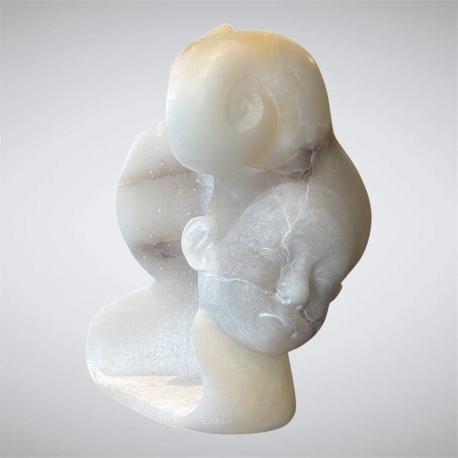
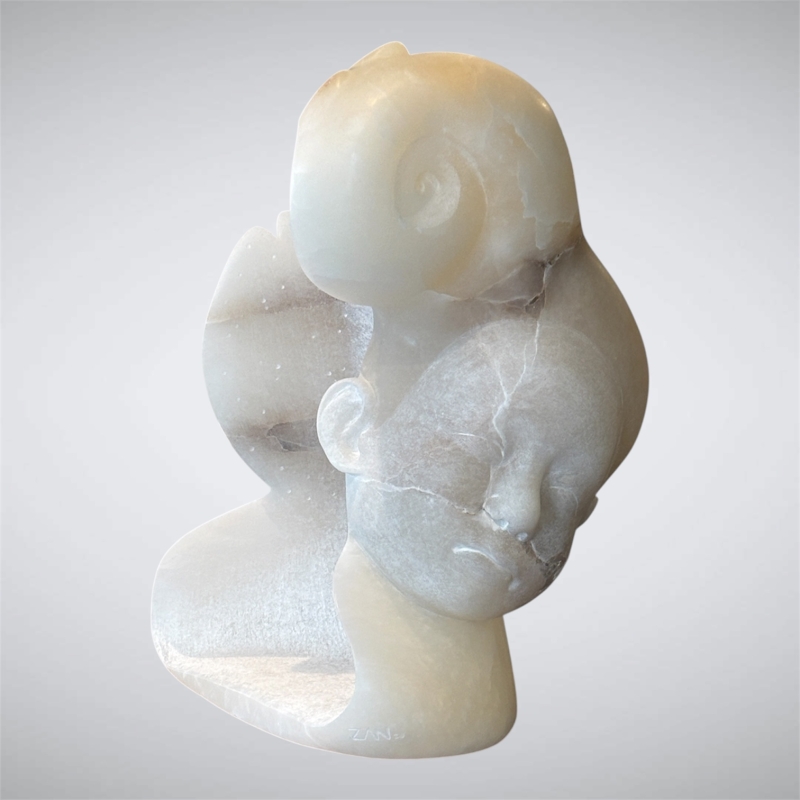
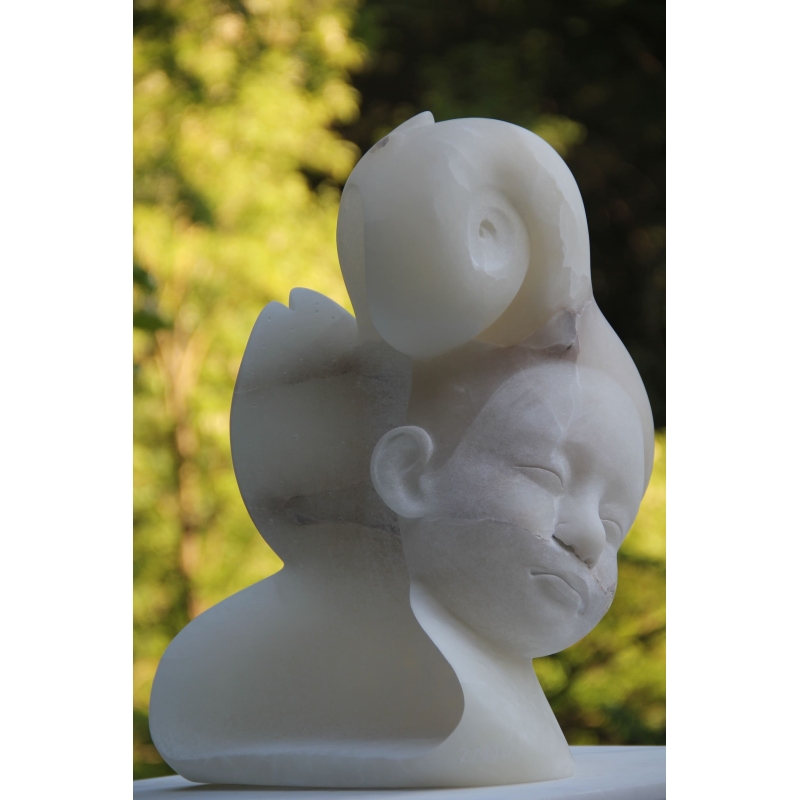
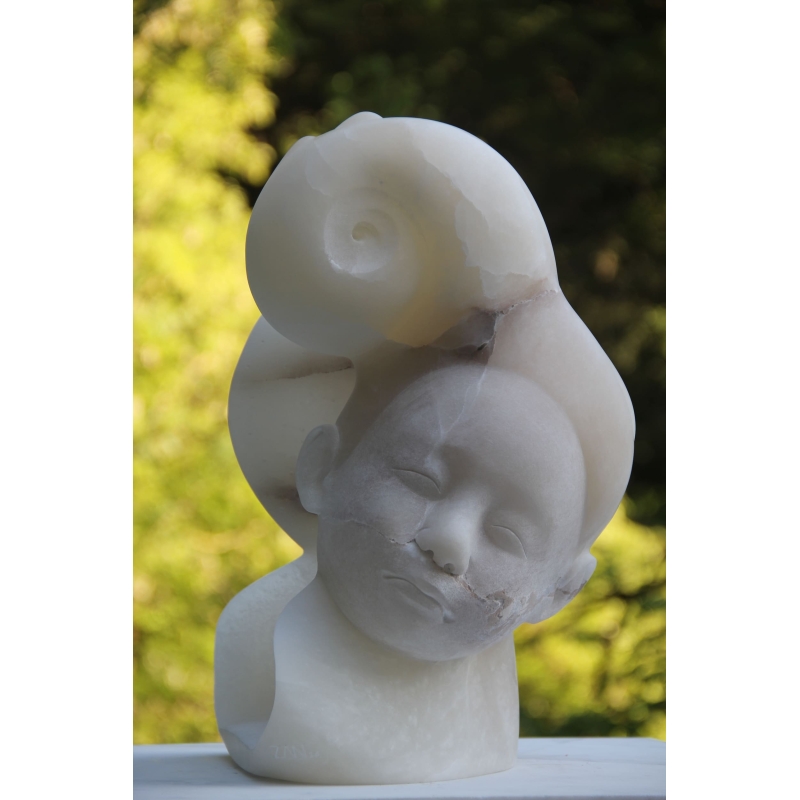
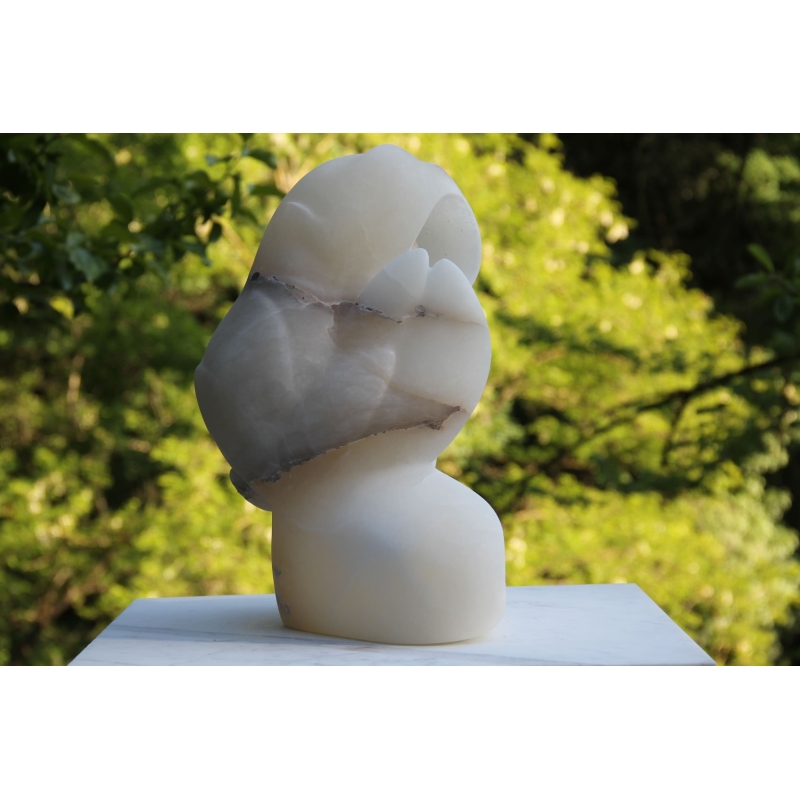
Carved in luminous alabaster, Iperico depicts a serene face with closed eyes, suspended in a moment of introspection. The expression evokes calm and inner reflection, yet a visible fracture traverses part of the face. Rather than concealing this mark, Claudia Zanaga integrates it into the narrative of the sculpture, transforming it into a central symbol of the work. Above the head unfolds a spiral organic form, suggestive of a flower, a seed, or a protective vegetal presence. Together, these elements create a delicate balance between fragility and strength, suffering and regeneration.
The title Iperico refers to Hypericum perforatum, commonly known as St. John’s Wort, a medicinal plant celebrated for centuries for its healing properties. The text accompanying the sculpture explains how this plant actively seeks sunlight and thrives in harsh environments where many others fail. It is precisely this symbolism that inspires the work: a living organism capable of transforming wounds into sources of vitality and renewal.
The Beauty of Resilience
At the heart of Iperico lies the concept of resilience. The face appears peaceful despite its visible scar, suggesting not the absence of pain but its transformation. Claudia Zanaga presents healing not as erasure but as integration. The wound remains present, becoming part of the identity of the figure rather than a flaw to be hidden.
This idea resonates deeply with contemporary audiences. In a world marked by uncertainty and change, Iperico reminds us that vulnerability and strength are not opposites but complementary forces. The sculpture embodies the notion that growth often emerges from experiences of rupture and that light can coexist with imperfection.
The choice of alabaster reinforces this message. Revered since antiquity for its translucency, alabaster possesses a unique ability to capture and diffuse light. As illumination passes through the stone, the sculpture seems to glow from within, creating subtle variations in tone and atmosphere. This inner luminosity becomes a metaphor for the work itself: despite the fracture, light continues to circulate.
Nature as a Language of Healing
A recurring theme in Claudia Zanaga’s artistic practice is the dialogue between human experience and natural forms. In Iperico, the botanical reference is not decorative but symbolic. The spiral form emerging above the figure evokes growth, renewal, and the cyclical rhythms of life.
The accompanying text notes that when the flowers of St. John’s Wort are crushed, they release a deep red liquid long associated with healing. This transformation of injury into remedy finds a compelling sculptural parallel in the artwork. The scar carved into the face becomes a visual equivalent of the plant’s medicinal essence: a reminder that what is wounded can also become a source of strength and wisdom.
By bringing together the human figure and the symbolic presence of the plant, Claudia Zanaga creates an artwork that speaks across cultures and generations. The sculpture addresses universal experiences—loss, endurance, recovery, and hope—through a language of form and material rather than literal narrative.
A Contemporary Sculpture of Timeless Significance
Iperico exemplifies Claudia Zanaga’s ability to unite technical mastery with poetic meaning. The refined carving, the subtle play of light within the alabaster, and the emotional resonance of the imagery combine to create a work that is both visually captivating and intellectually engaging.
Whether displayed in a contemporary art collection, a sculpture garden, or a gallery setting, Iperico commands attention through its quiet presence. It invites contemplation rather than spectacle, encouraging viewers to slow down and reflect on their own experiences of transformation.
With Iperico, Claudia Zanaga offers more than a sculpture. She presents a powerful metaphor for the human condition: a reminder that wounds can become sources of wisdom, that fragility can reveal unexpected strength, and that the search for light remains one of life’s most profound impulses. Through the timeless beauty of alabaster and the symbolic richness of the millepertuis, Iperico stands as an eloquent celebration of resilience, healing, and hope.